
MOTOR-ZOOM
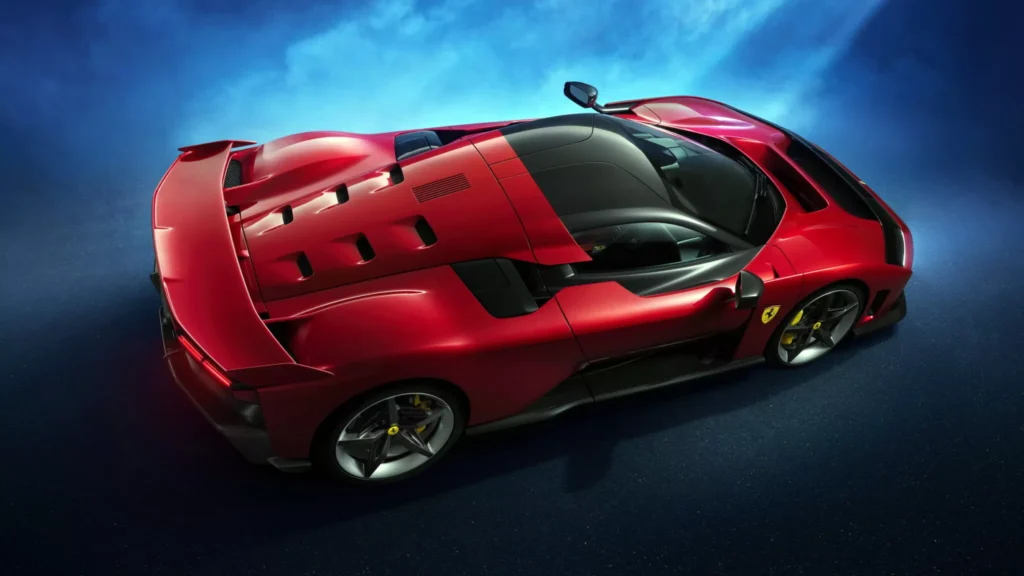
- The F80 is Ferrari’s new supercar, a car destined to join iconic models from the 1984 GTO to the 2016 LaFerrari Aperta
- The F80 is a showcase for the ultimate in technology and performance from the marque and represents an extreme development of the internal combustion engine
- With a combined maximum power of 1200 hp, the V6-hybrid powertrain of the F80 makes it the most powerful road car ever to come out of the gates of the Ferrari factory
- A host of advanced technological solutions makes the F80 the new benchmark for innovation and engineering excellence
The F80 is Ferrari’s all-new hybrid, formerly codenamed F250, and it’s not here to play nice. The operatic V12 has been replaced by a twin-turbocharged V6 that makes a brutal 1,184 horsepower.
Purists may bemoan the loss of the naturally aspirated V12, but this V6 has pedigree — it’s closely related to the engine that powered the 499P race car to back-to-back Le Mans wins. The car goes from 0 to 62 mph in 2.15 seconds, while the top speed is “more than 217 mph.”
V6, not V12,, are you Feeling sad?
Ferrari’s last three supercars — the LaFerrari, Enzo, and F50 — have been powered by V12s, but the F80 has half the cylinder count. The F163CF is a 120-degree V6 related to the engines in both the 296 GTB and the Le Mans-winning 499P. But instead of the 296’s 654 horsepower,
The F80’s lighter internal combustion engine components pump out 888 horsepower, and torque rises from 550 lb-ft (740 Nm) to 650 lb-ft (850 Nm). And that’s before we add the hybrid boost.
Three electric motors but no EV mode
The rear-wheel-drive 296 GTB has a single electric motor, but the F80 adopts a three-motor setup that’s much like the SF90. Two motors up front deliver up to 282 horsepower (210 kilowatts) to the front wheels and enable torque vectoring, while a third motor sends 80 horsepower (60 kilowatts) to the rear wheels but is capable of generating 94 horsepower (70 kilowatts) by harvesting braking energy.
The addition of hybrid muscle gives the F80 a total output of 1,184 horsepower compared to the 296’s 819 horsepower and makes the F80 Ferrari’s first all-wheel-drive supercar. But despite having plenty of electric power, the F80 doesn’t have an EV mode.
It knows when it needs an extra boost
Ferrari has designed the powertrain boost to mimic the feel of a naturally aspirated engine, but the clever part is something called Boost Optimization. Once it’s up and running, the driver takes a look around their chosen circuit and the F80 records the curves and straights, identifying where a performance boost might be useful and ready to deploy it on the next lap.
Only the F80 gets a carbon chassis
Unlike McLaren, which uses a carbon chassis on every car in its range, even the Artura, Ferrari sticks to aluminum for its series road cars, saving the composite technology for champion cars like the F80. However, aluminum, better at absorbing crash energy, is still used here for the front and rear subframes.
Inspired by the F40
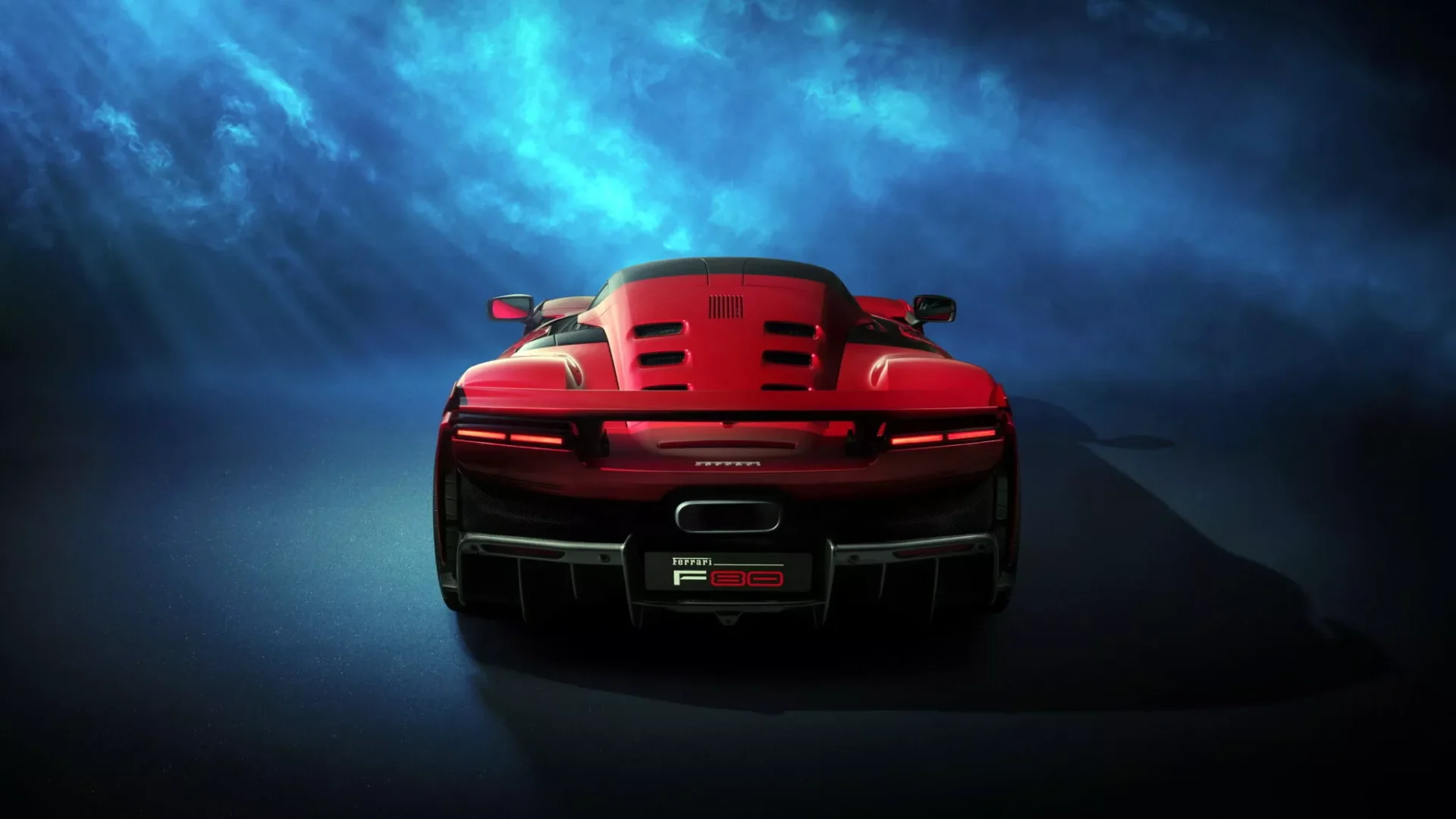
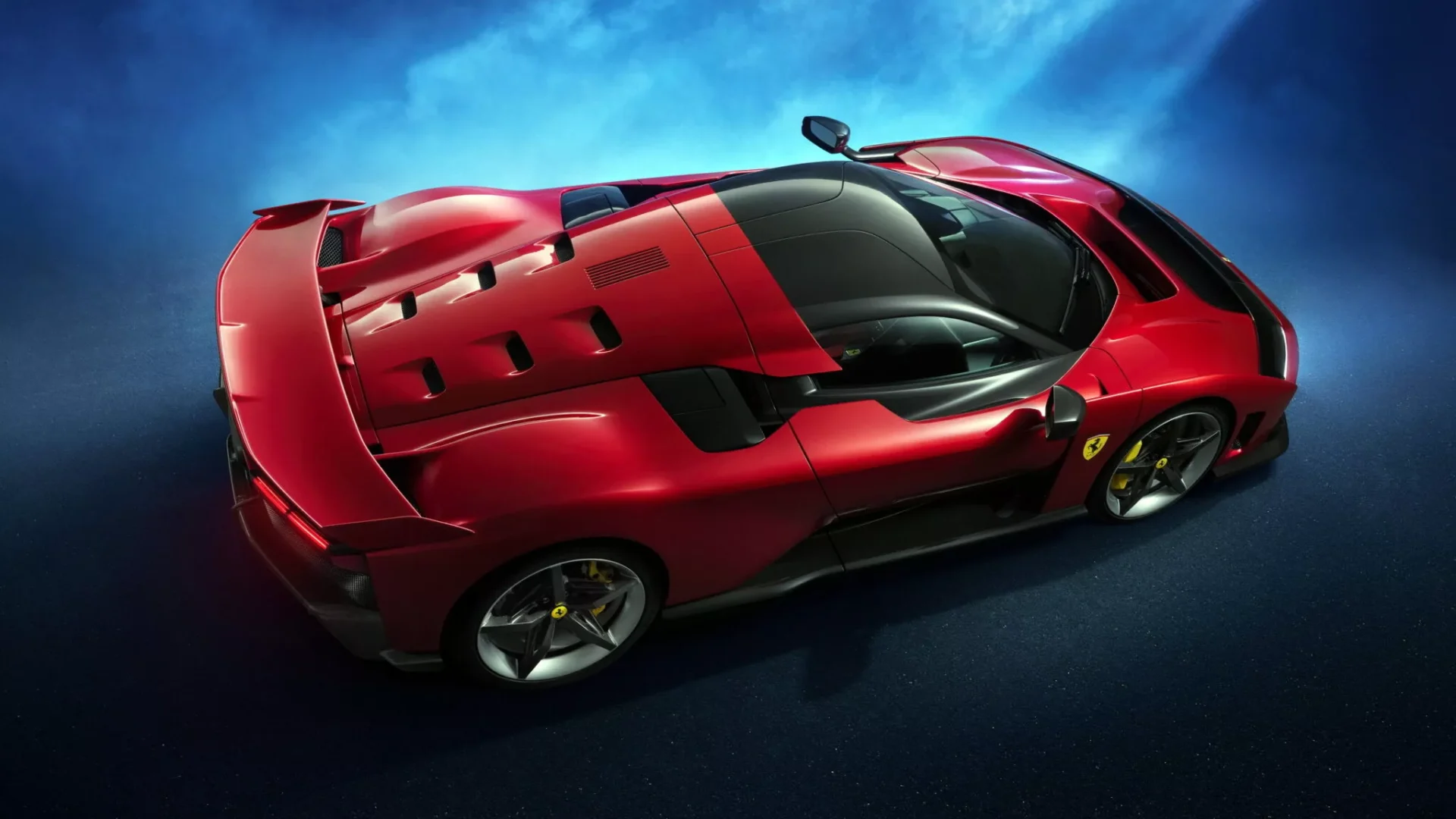
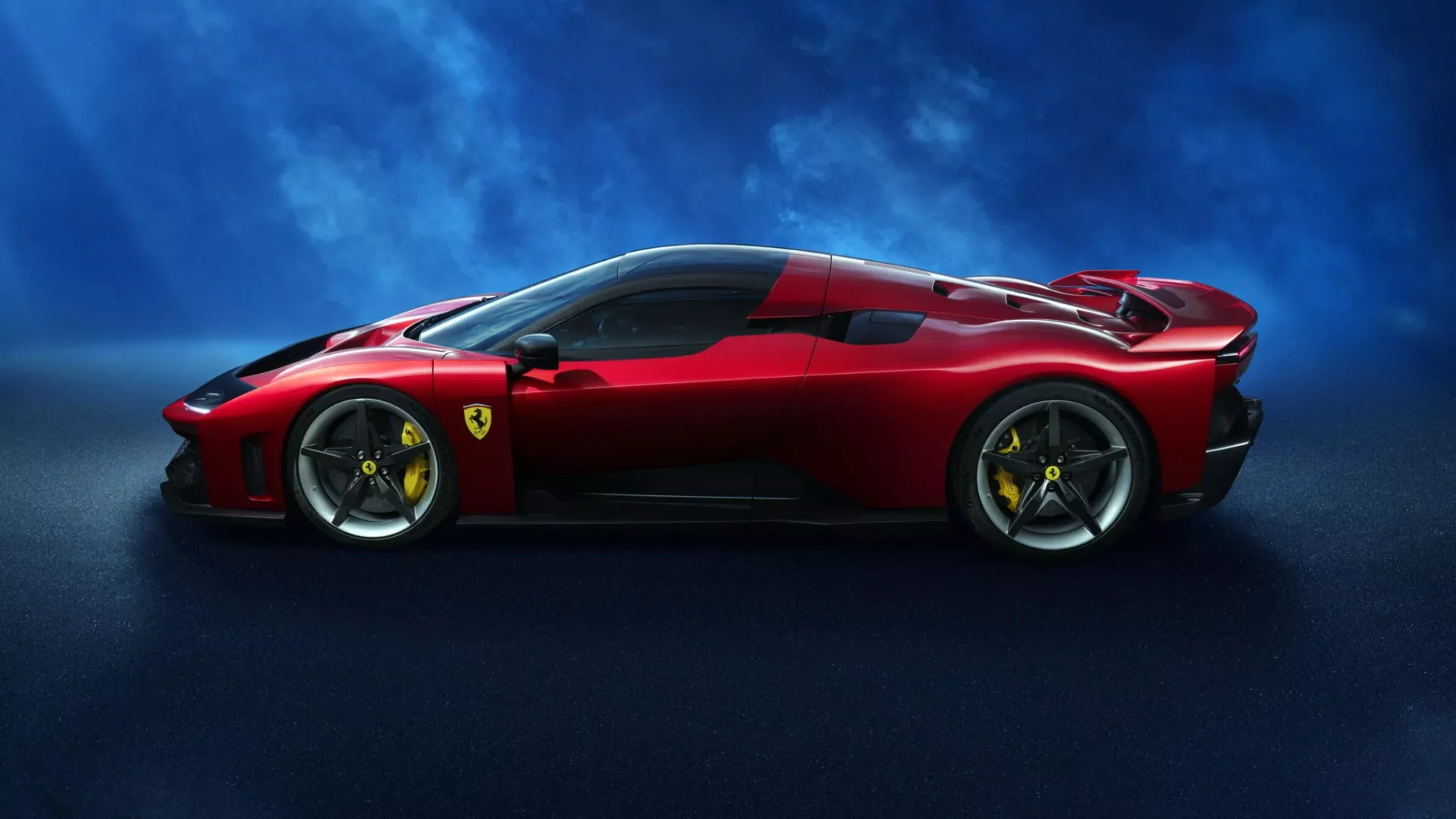
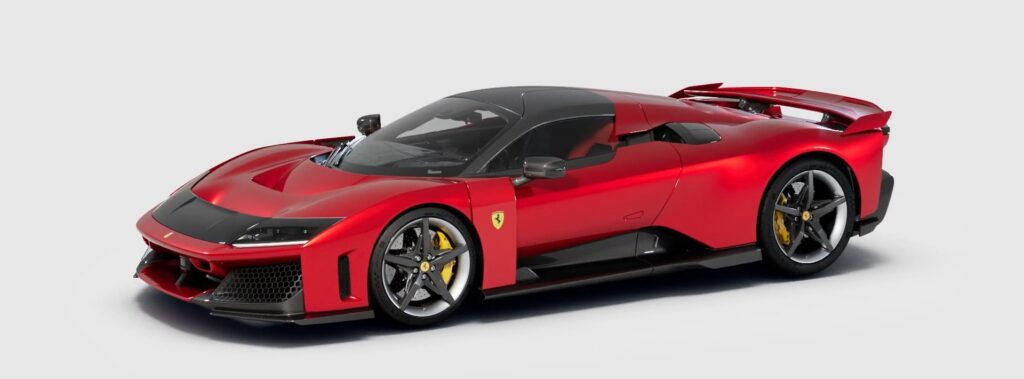
Ferrari says the F80’s design offers clues about where the brand’s design language is headed, so perhaps we can expect the black stripe to become a calling card. But the 365 GTB/4 Daytona isn’t the only classic Ferrari that design chief Flavio Manzoni and his crew have borrowed from. The boxy front fenders are straight from the F40.
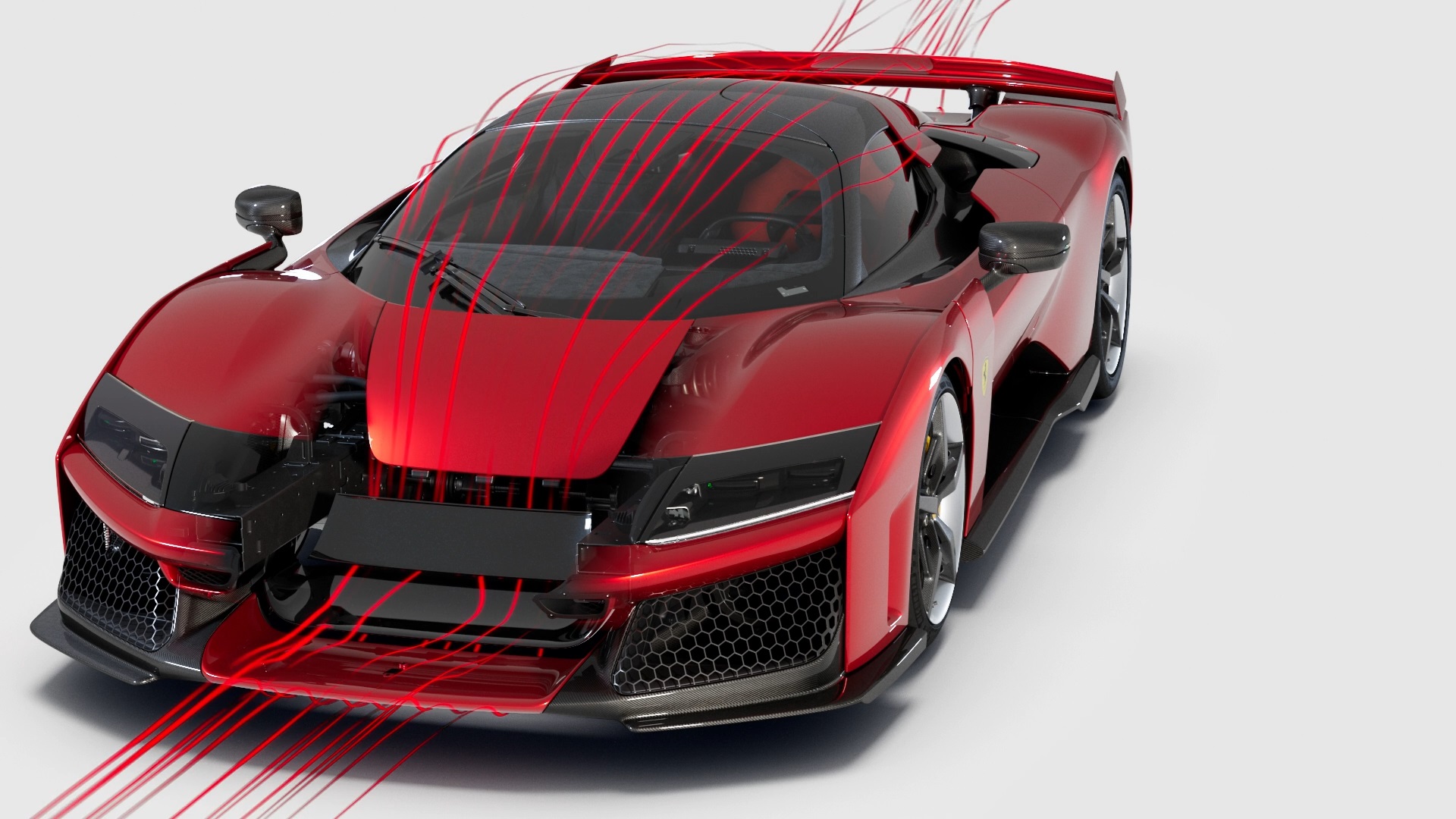
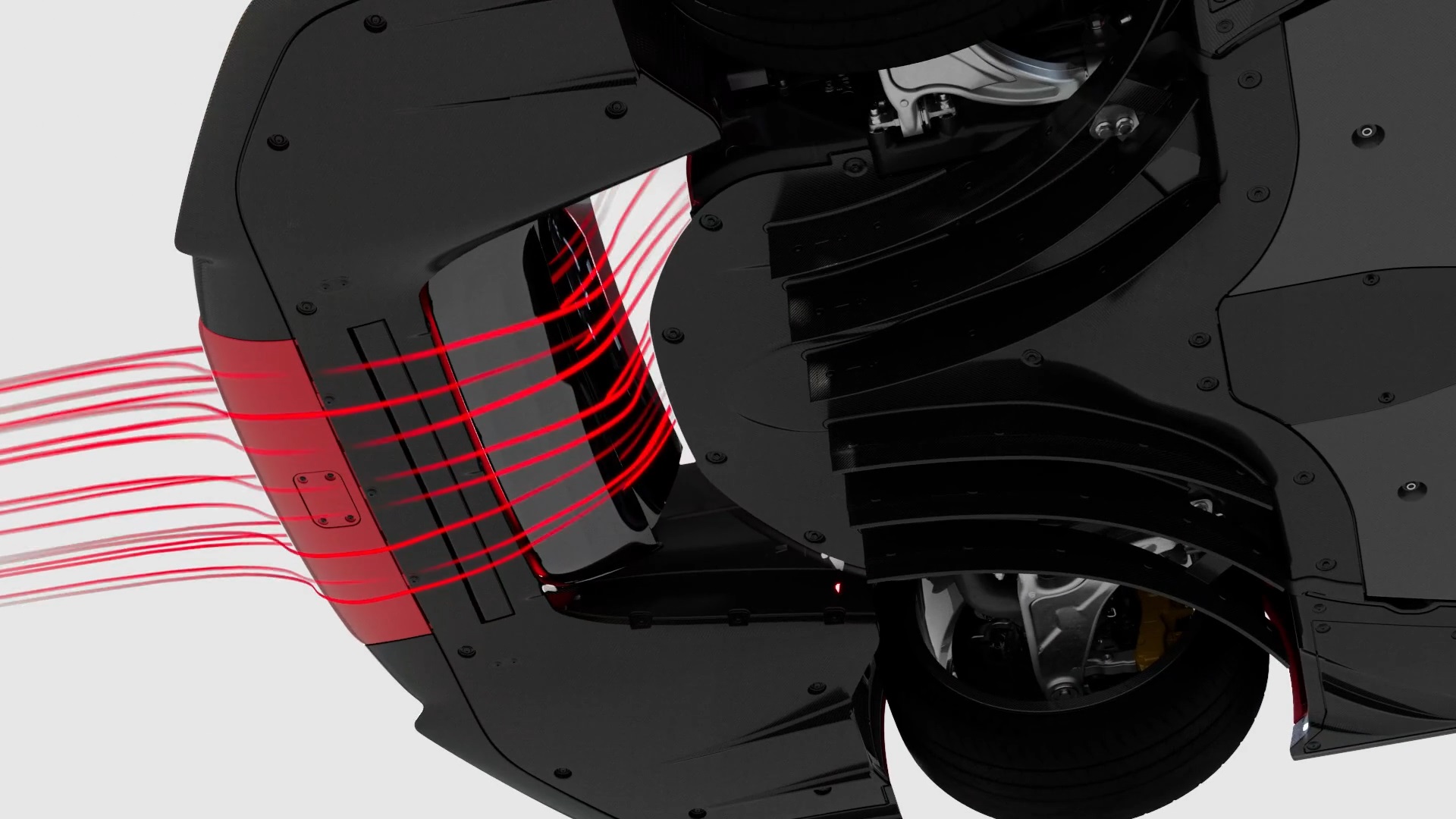
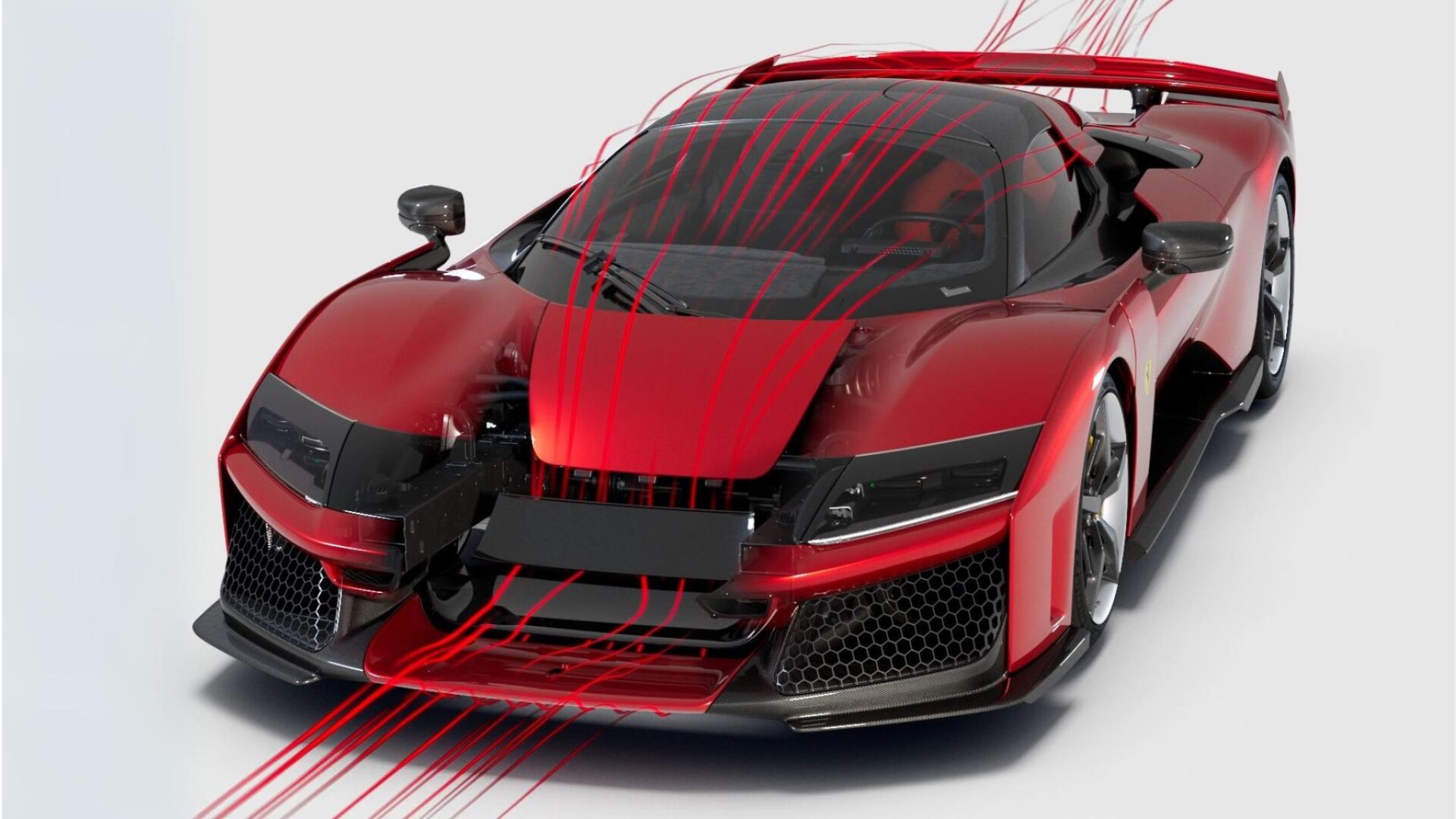
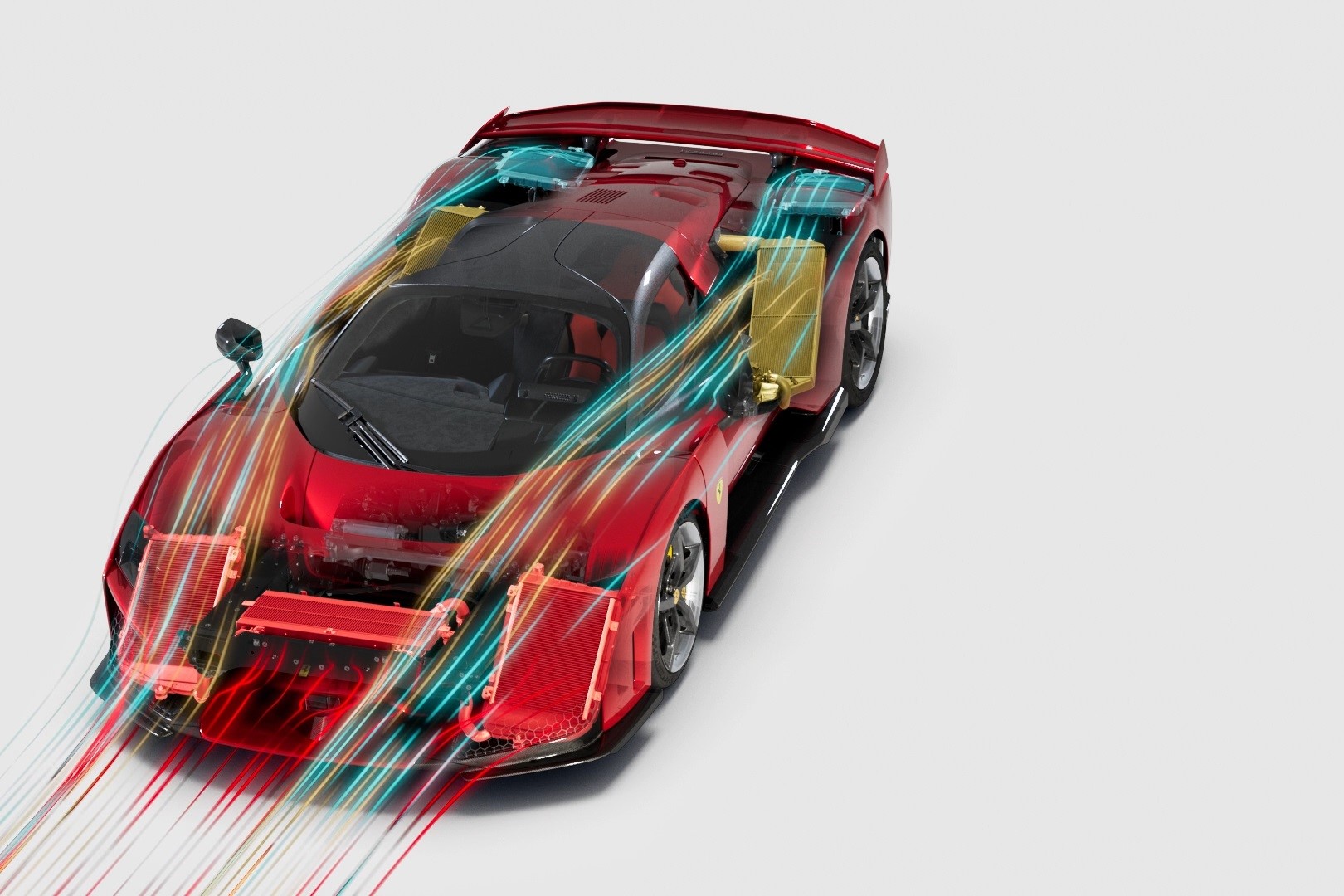
The F80’s aerodynamic design generates an astonishing 1,000 kg (2,200 lb) of downforce at just 155 mph (250 km/h). This is achieved through a combination of managing airflow through and over the nose, via the rear diffuser, and by adjusting the active rear wing.
A Driver-Focused Interior
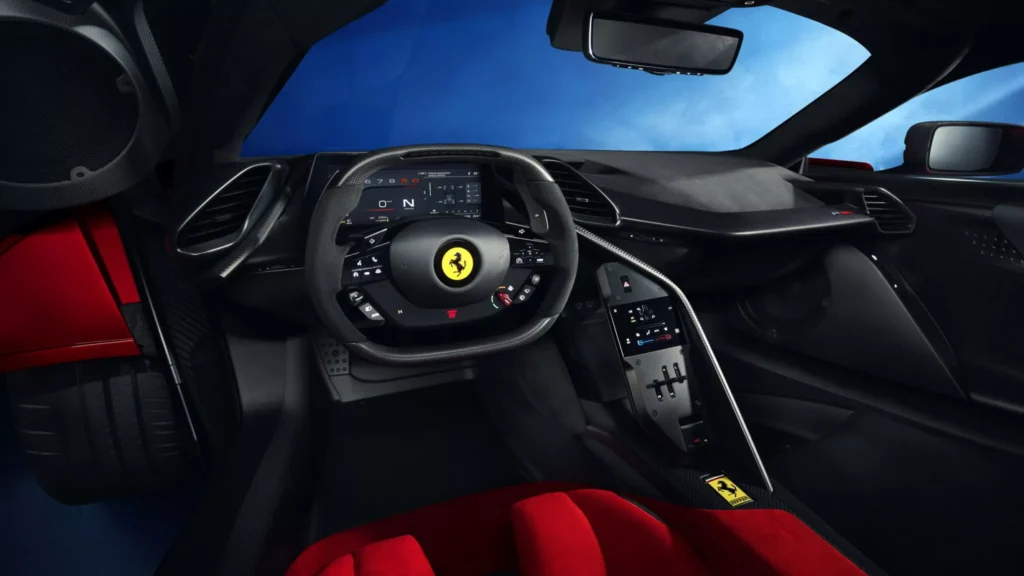
You know that feeling when you’re so immersed in a good road that you completely forget there’s anyone driving? Ferrari has designed the F80 to feel that way from the moment you get behind the wheel. While the driver gets a red adjustable seat, the passenger seat is set back (allowing for a tighter cabin space) and is upholstered in the same muted colors as the rest of the interior, meaning the F80 feels like a single-seater.
Ferrari calls this car the “+1” and has even angled the console so sharply toward the driver that the passenger has a hard time seeing the digital controls, or the gearshift switch that once again resembles the classic open-gate gearshift paddles.
It’s not just the F80’s exterior styling that we’ll see in future, lower-priced Ferraris. The steering wheel is also destined to carry over to other models, which is great news because it features old-fashioned physical buttons instead of the annoying touch-sensitive type found on the SF90 and 296.
Suspension borrowed from the Purosangue SUV
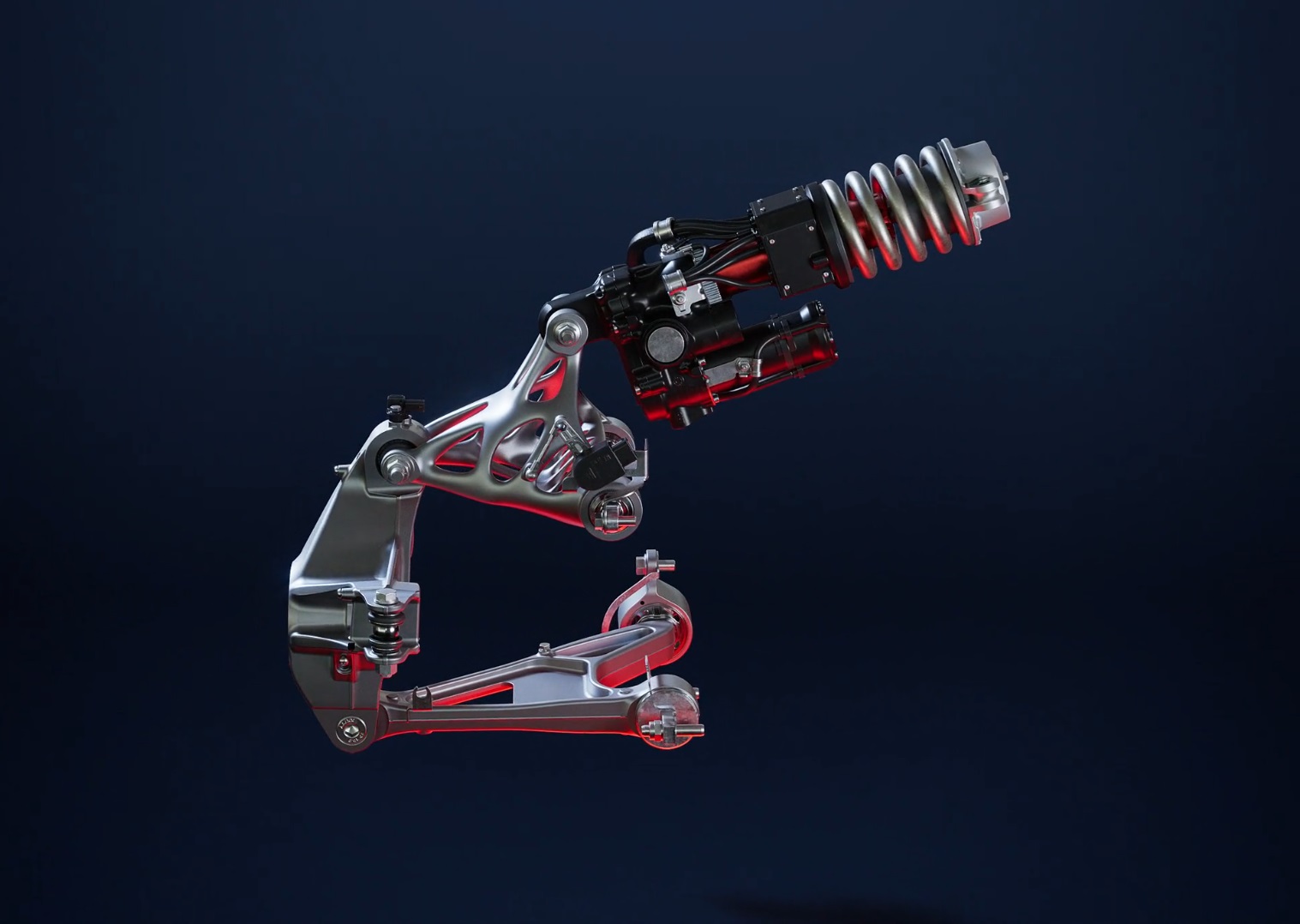
The F80 may share its engine with the 296, but it’s the four-seat Purosangue SUV that offers the helping hand when it comes to suspension setup. You won’t find race-style shock absorbers or 3D-printed wishbones on the Purosangue, but both cars replace traditional anti-roll bars with four 48-volt electric motors that keep the body flat in corners to minimize the effects of weight shifting.

Ferrari also worked with Brembo to come up with the next generation of CCM-R Plus carbon brakes that are claimed to offer twice the mechanical strength and 300 percent better thermal conductivity than older carbon brakes. The next generation of CCM-R Plus carbon brakes are claimed to offer twice the mechanical strength and 300 percent better thermal conductivity than older carbon brakes.
Ferrari builds 799, so it’s not that rare
The F80 costs around $3.9 million, but there’s no shortage of enthusiasts in the world with that kind of money because Ferrari says it will build 799 examples. That compares to 499 examples of the LaFerrari. Those cars were in high demand, so it seems Ferrari decided it could capitalize on the demand this time around. While Maranello hasn’t confirmed that an Aperta Spider will follow, it’s a sure thing given Ferrari’s history.